

Perspectives

Trade shows and spacesGuide

How to plan a trade show stand that performs beyond the three show days

A trade show is won before it opens and cashed in after it closes. The stand is the visible part of a strategy that starts with who you want to meet, continues with a space designed for conversation and ends with disciplined commercial follow-up.

Diego Pardo Ramírez

Founder and Managing Director, Pragmatical

· 2 min read

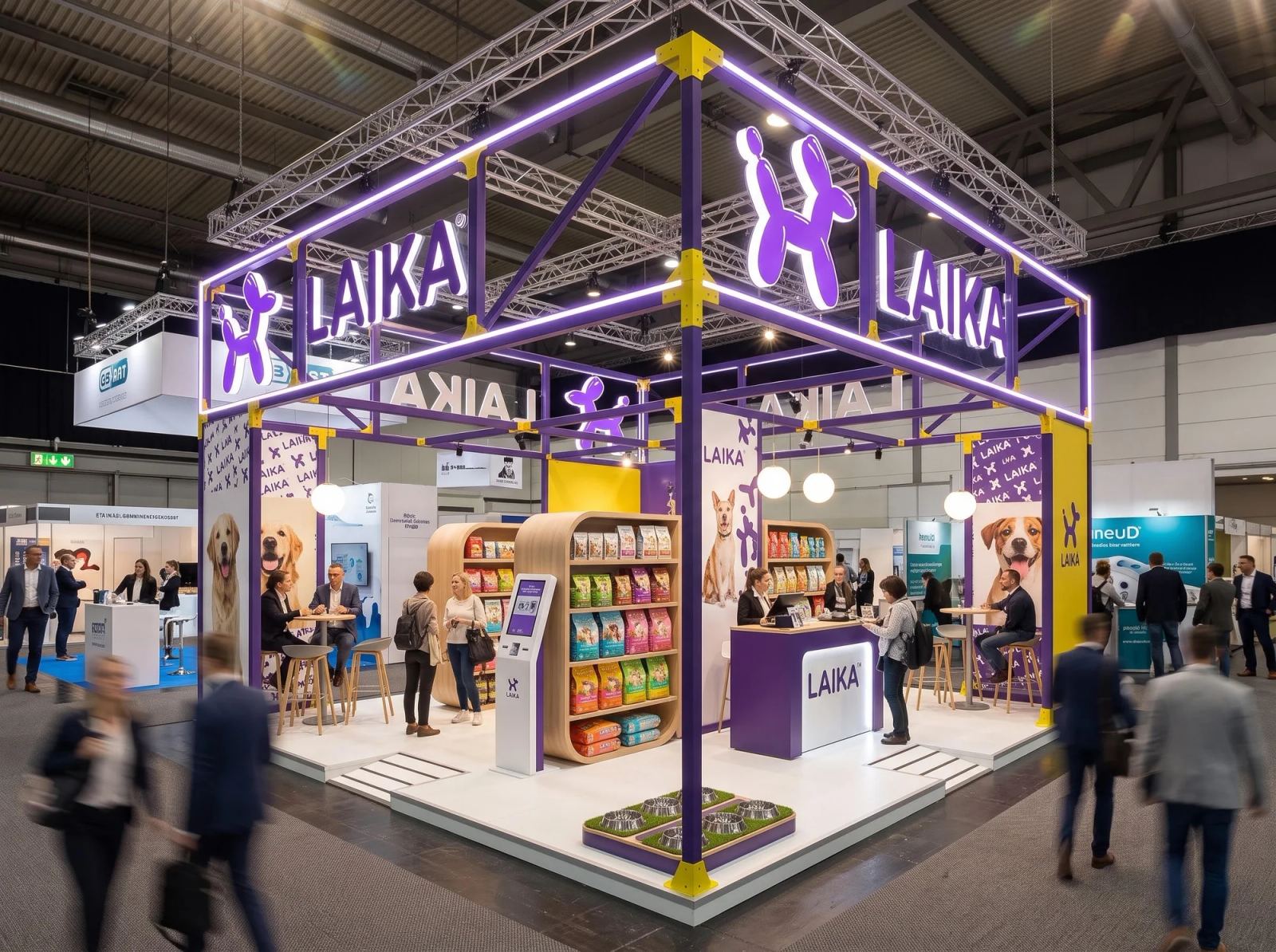
Laika stand with an illuminated purple structure at a trade show

In brief

  • 38% of exhibition companies expect stable revenues and 27% growth above 5% (UFI, 2026).
  • A stand performs when it is designed for conversations, not just to be seen.
  • Modular, reusable design: lower cost per show and less waste.

The context

UFI’s Global Exhibition Barometer, published in July 2026 with data from 466 companies in 59 countries, shows a stable sector: 38% expect stable revenues and 27% growth above 5%, while geopolitical tensions rise to second place among concerns. In this environment, exhibitors want more results for every peso invested.

Before: goals and agenda

  • Define what counts as success: qualified meetings, a launch, positioning or on-site sales.
  • Build the agenda before arriving: meetings with clients and prospects confirmed in advance.
  • Design the stand from those goals: display, demonstration and meeting areas, in the proportion each goal requires.

A trade show is won before it opens and cashed in after it closes.

During: a space for conversation

The best stand is the one that enables the right conversation, whatever its size. Clear circulation, a message understood in three seconds from the aisle, lighting that guides, staff trained to qualify visitors and a simple way to record each contact. Accessibility counts too: step-free access, tables at different heights and legible materials.

Modular, reusable and sustainable

A well-designed modular system adapts to different shows, sizes and countries, reduces the cost per participation and cuts build-up waste. That is what we did with the Laika stand, designed as a store that travels from show to show between Colombia and Mexico.

After: follow-up is half of the result

Leads go cold quickly. Classify them the same day, assign an owner and date to each and measure how many opportunities and sales came out of the show. With that data, the decision to return, grow or change shows stops being a hunch.

Sources

  • UFI, Global Exhibition Barometer, 37th edition (July 2026).

Related services

Trade shows and ephemeral architectureBrand activations

Keep reading

Corporate event attendees checking their phones while standing

InnovationAnalysis

Artificial intelligence in events: where it helps and where it does not

The events industry already uses artificial intelligence; what is still under discussion is what for. MPI and UFI data show accelerating adoption, and experience shows its value lies in giving people time back for judgement, not replacing it.

· 2 min read

kotiza launch piece with the app on a phone

InnovationCase

kotiza: why an events agency built its own quoting software

In a service company, the quote is the first product the client receives. From that conviction, and years of quoting events on spreadsheets, kotiza was born: a platform to quote, follow up on opportunities and turn approved work into service orders.

· 2 min read

Professionals reviewing documents around a work table

Strategy and communicationGuide

How to prepare a tender proposal for events that wins on judgement

In an events tender, price matters, but it rarely decides alone. The proposals that win are those that show they understood the organization’s goal, meet every requirement without gaps and present a concept that can be delivered.

· 2 min read

Have a project in mind?

Let's talk about your project and how to solve it.

Let's talk about your project